
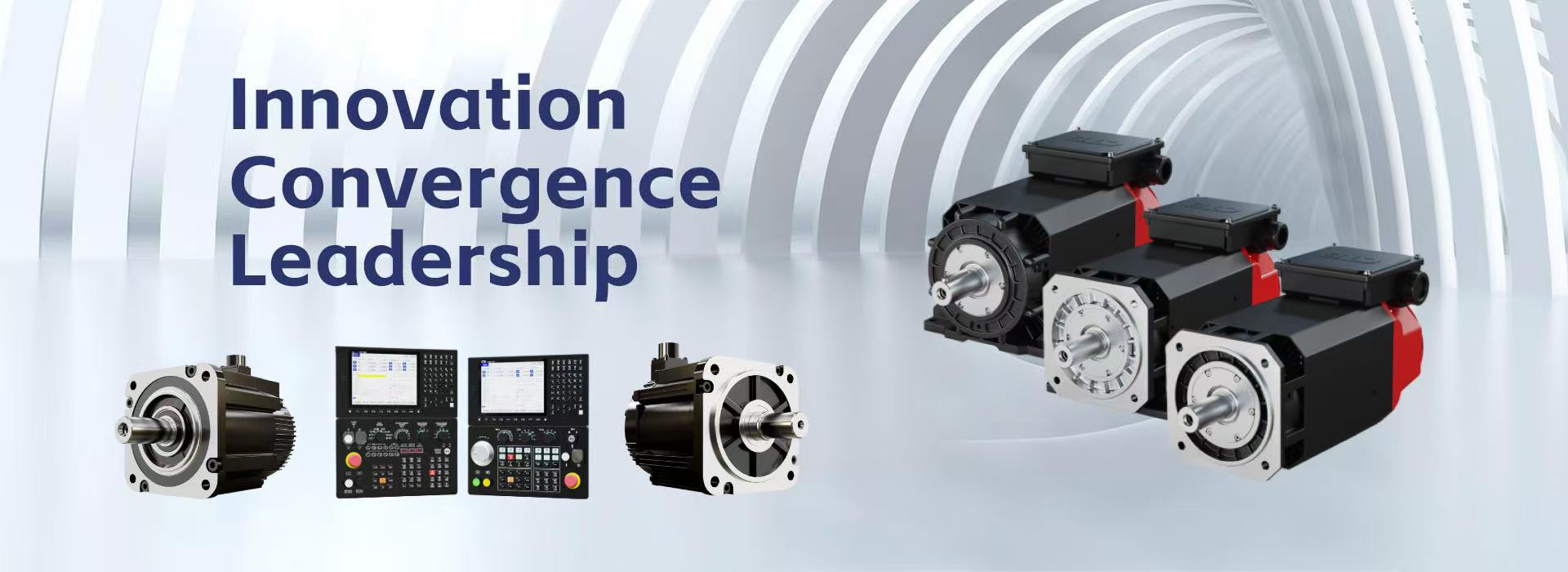
In the fields of automated equipment, industrial robots, industrial machinery and intelligent equipment, electric motors serve as the core power components. Many purchasers and technical staff struggle to distinguish between different types of motors in the early stage of model selection. From a practical perspective, this article sorts out mainstream motor types available on the market, their characteristics and corresponding application scenarios to help readers quickly build a clear understanding.
1. DC Motors
DC motors operate on direct current power supply with an early development history and mature technology. Their key advantages include high starting torque, straightforward speed regulation, easy-to-understand control logic, flexible volume design, and high safety for low-voltage variants.
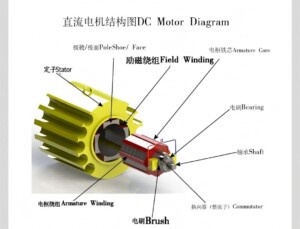
Application Scenarios: Small mobile equipment, vehicle-mounted devices, portable machinery, miniature transmission mechanisms, and low-speed auxiliary equipment. For equipment demanding flexible speed regulation under relatively simple working conditions, DC motors deliver a cost-effective solution.
2. AC Motors
AC motors run on industrial alternating current and represent the most widely used motor category in the industrial sector, split into two main types: asynchronous motors and synchronous motors.
AC Asynchronous Motors: Featuring a simple structure, outstanding durability, low failure rates and affordable costs, they maintain exceptional stability during prolonged continuous operation.
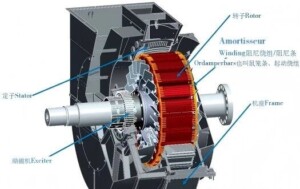
Application Scenarios: Large industrial fans, water pumps, assembly line conveyors, general-purpose machine tools and other standard industrial equipment operating under long-term full-load conditions, acting as the standard power source for factories.
AC Synchronous Motors: Boasting precise operating rotational speeds, superior energy efficiency and lower power consumption, they outperform asynchronous motors in control accuracy.
Application Scenarios: Precision production lines, high-precision processing machinery and energy-saving large-scale units with strict requirements for rotational speed and positioning.
3. Stepper Motors
Stepper motors deliver precise control over rotation angle and displacement through step-by-step operation, offering exceptional positioning performance. A core feature is the ability to achieve accurate positioning via open-loop control without additional complex feedback devices, paired with intuitive control logic.
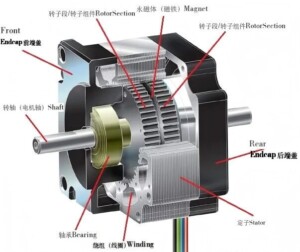
Application Scenarios: 3C automation equipment, engraving machinery, miniature precision positioning transmission mechanisms, instruments and meters, and light-load precision displacement devices.
Drawback: Torque drops significantly at high rotational speeds, making them unsuitable for heavy-load, high-speed working conditions.
4. Servo Motors
Recognized as the benchmark for high precision and dynamic performance across the industry, servo motors feature fast response, consistent torque output and ultra-high positioning accuracy when paired with servo drives.
Key characteristics include a wide speed regulation range, strong overload capacity and smooth operation, enabling compatibility with frequent start-stop cycles and complex motion cycles.
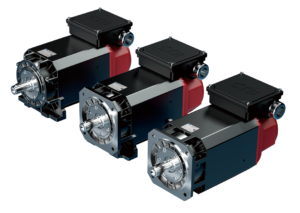
Application Scenarios: Industrial robots, manipulators, robotic joint modules, high-end CNC machine tools, intelligent warehousing equipment and premium automated production lines. They are currently the dominant motor choice for intelligent equipment manufacturing.
5. Axial Flux Motors
A new type of motor gaining rapid popularity in recent years, axial flux motors differ structurally from traditional radial flux motors as their magnetic flux distributes along the axial direction.
Core strengths include compact dimensions, lighter weight, high power density, excellent torque output and optimized heat dissipation structures.
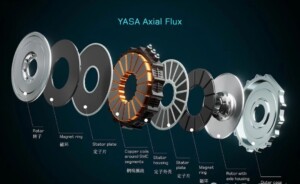
Application Scenarios: Robotic joints, quadruped robots, lightweight intelligent equipment, new energy devices and compact high-power-density power units. They are our flagship products tailored for all categories of next-generation intelligent equipment.
Summary
No single motor type is universally superior; suitability depends entirely on application demands.
Choose AC asynchronous motors for low-cost and long-duration continuous operation;
Opt for stepper motors if precise positioning and simple control are top priorities;
Servo motors and axial flux motors dominate high-end automation and robotics applications.
We will further break down motor parameters and model selection techniques in follow-up articles. Feel free to reach out for any product selection or technical inquiries.